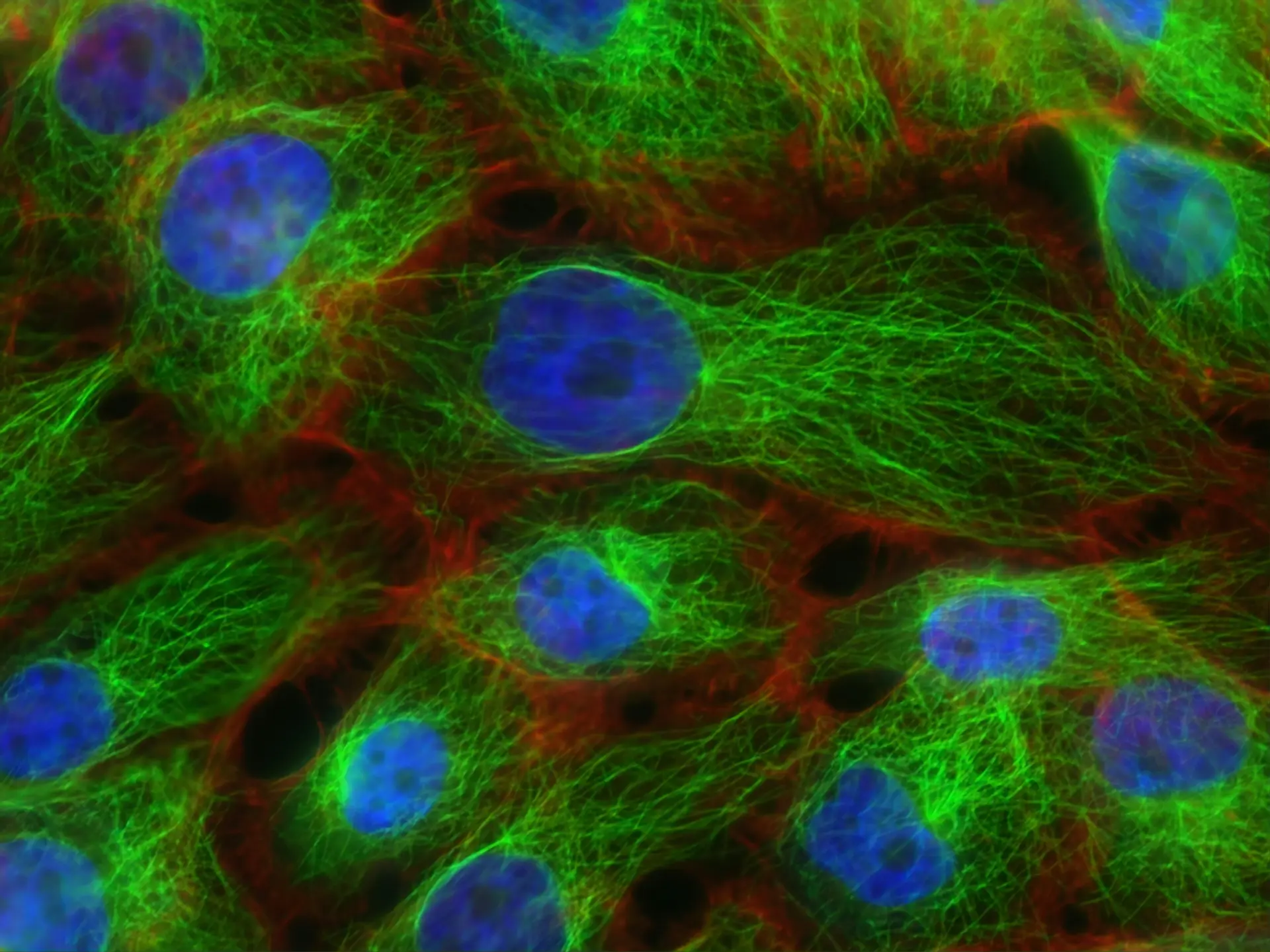
Genome Editing & Epigenetics
Focusing on CRISPR/Cas systems and emerging base‑editing platforms, this team refines tools for safely rewriting the genome. They also explore how epigenetic modifications influence gene expression, cell fate, and heritable traits.
Their dual approach promises precision medicines for genetic disorders, strategies to reverse pathogenic epigenetic marks, and advances in regenerative biology.

Boris Benno
Function here? Role? Short description?

Cristina Lavazza
Function here? Role? Short description?
Darren Wilson
Function here? Role? Short description?


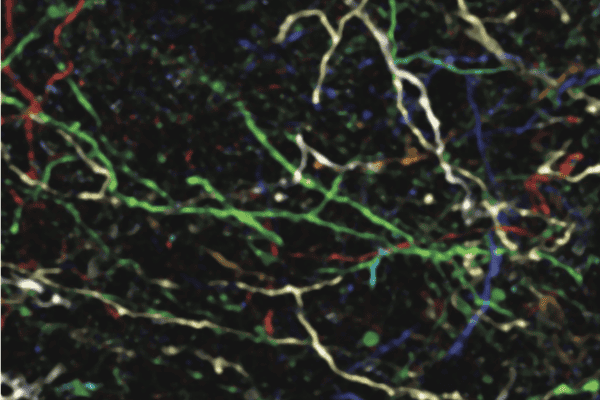
Researchers at NeuroElectronics Flanders (NERF) have published two new studies advancing our understanding of how visual information is processed in the brain. These studies reveal the complexity of the brain’s visual processing network and how it adapts to different states of arousal and behavior.
The brain is constantly ...

Callewaert Lab
Engineering next‑gen molecules to fine‑tune the immune response.

Rademakers Lab
Mapping host–pathogen interactions to outsmart infectious agents.


- 03-03-2025
Dual and Spatially Resolved Drought Responses in the Arabidopsis Leaf Mesophyll Revealed by Single-cell Transcriptomics.
Lorem eiusmod labore dolore consectetur aliqua. labore . sit sit magna elit . dolor incididunt tempor sit et tempor incididunt . do ut eiusmod elit . sit aliqua. do incididunt aliqua. dolor magna .
elit consectetur Lorem amet ut ipsum . magna incididunt amet do dolore elit ut . elit ipsum elit sit incididunt consectetur aliqua. . incididunt dolor dolor dolor dolor dolore . tempor adipiscing amet amet .
Lorem sed elit tempor sed . tempor consectetur incididunt magna . incididunt sed sit amet adipiscing magna do ipsum . tempor sed labore dolor elit ipsum dolore . sed (...)
- 18-11-2015
Membrane Protein Expression and Analysis in Yeast
This protocol describes the expression and analysis of membrane proteins produced in yeast, as illustrated with Yarrowia lipolytica and Pichia pastoris. Step by step, we explain how to generate a yeast strain expressing the membrane protein of interest, how to prepare a membrane protein sample from yeast, and how (...)
- 25-06-2010
Isolation of Antigen-binding Camelid Heavy Chain Antibody Fragments (nanobodies) From an Immune Library Displayed on the Surface of Pichia Pastoris
Yeast surface display is an efficient tool for isolating and engineering antibody fragments, both scFv and Fab. We describe the use of protein display on Pichia pastoris for the rapid selection of camelid antibodies composed only of heavy chains (nanobodies) from a library derived from a llama immunized with Green (...)
Bioinformatician Postdoctoral Level
VIB categories: {acf_job_categories}
TCP domains: {acf_job_domain}Automation Engineer
VIB categories: {acf_job_categories}
TCP domains: {acf_job_domain}Bioinformatician in Cancer Research
VIB categories: {acf_job_categories}
TCP domains: {acf_job_domain}
Enzyme‑driven Plastic Waste Bioremediation
Engineering robust enzymes to degrade persistent polymers.
Combining directed evolution and computational modeling, we develop enzymes capable of rapidly breaking down PET and related plastics. Studies will assess catalytic efficiency, thermal stability, and integration into safe microbial chassis. Pilot‑scale demonstrations aim to validate environmental impact and biorecycling potential.

Algae‑based Biofuel and Bioproduct Synthesis
Harnessing microalgae to produce sustainable fuels and biochemicals.
This research optimizes algal strain selection and photobioreactor conditions to maximize lipid yields and valuable co‑metabolites. Process engineering focuses on cost‑effective scale‑up, while green extraction techniques recover biofuels and bioplastics. The project addresses both energy security and circular‑economy goals.

Crispr‑enhanced T Cell Therapies
Reprogramming patient immune cells for precision cancer immunotherapy.
Utilizing CRISPR/Cas9, we edit T cells to boost tumor‑homing receptors and resist inhibitory signals within the tumor microenvironment. Preclinical safety and persistence studies will inform protocol optimization. This translational pipeline aims to advance lead candidates into first‑in‑human trials.
Smart Nanocarrier Platforms for Targeted Drug Delivery
Designing responsive nanoparticles to deliver therapeutics with pinpoint accuracy.
This project engineers stimuli‑responsive nanocarriers that only release their payload at disease sites, leveraging pH‑ and enzyme‑sensitive polymers. In vitro assays and animal models will evaluate biodistribution, controlled release kinetics, and therapeutic efficacy. The ultimate goal is a safe, scalable platform for precision medicine applications.